Gooooooollllllllll0xda3a…381f · 10m ago
Followed 69
Will Germany win on 2026-09-27?View market
No29.0¢ entryother63% win rateWatching
Live — 75 paper positions open, 140 wallets followed
Stratex Hub reads the Polymarket top 500, rejects the 88% whose profit came from luck, size, or timing you can't copy, and paper-trades the rest against a blind control — so you know whether the filter works before you risk a dollar.
$1631.30




51,436
88%
A big number on the leaderboard is usually one lucky market, a size you can't match, or an entry you can't reach in time. The desk finds out which, before you follow anyone.
Studies each wallet's last 30 days: ROI, how evenly the profit is spread, whether it came from one market, how thin the books were, how far price moved after each fill.
One-hit wonders, wallets that only win in markets too small to follow, and wallets that enter weeks before you could — all rejected, each with its reason written down.
When a followed wallet moves, the desk scores that trade: has price already run, is the spread payable, is there depth, does this wallet have an edge here. Copy, watch, or skip.
Every signal is also copied blind at a fixed size. If the filter can't beat that over time, the filter is decoration — and the desk shows you, rather than hiding it.
Rules change themselves from settled outcomes, a few at a time, and every change is versioned with the evidence behind it. You can read why the desk stopped trusting something.
Sign in and every desk signal opens a paper position sized to your bankroll and tiers. Your equity curve is yours; the research underneath is shared.
Every screen below is the live desk. Sign in and the same screens show your account beside it.
Average P&L per position, both arms. Too early to call: 13 of the 20 settled copies needed. The chart fills in by itself; no one draws it.
The leaderboard ranks by profit. This ranks by copyability, with the reservation against each name.
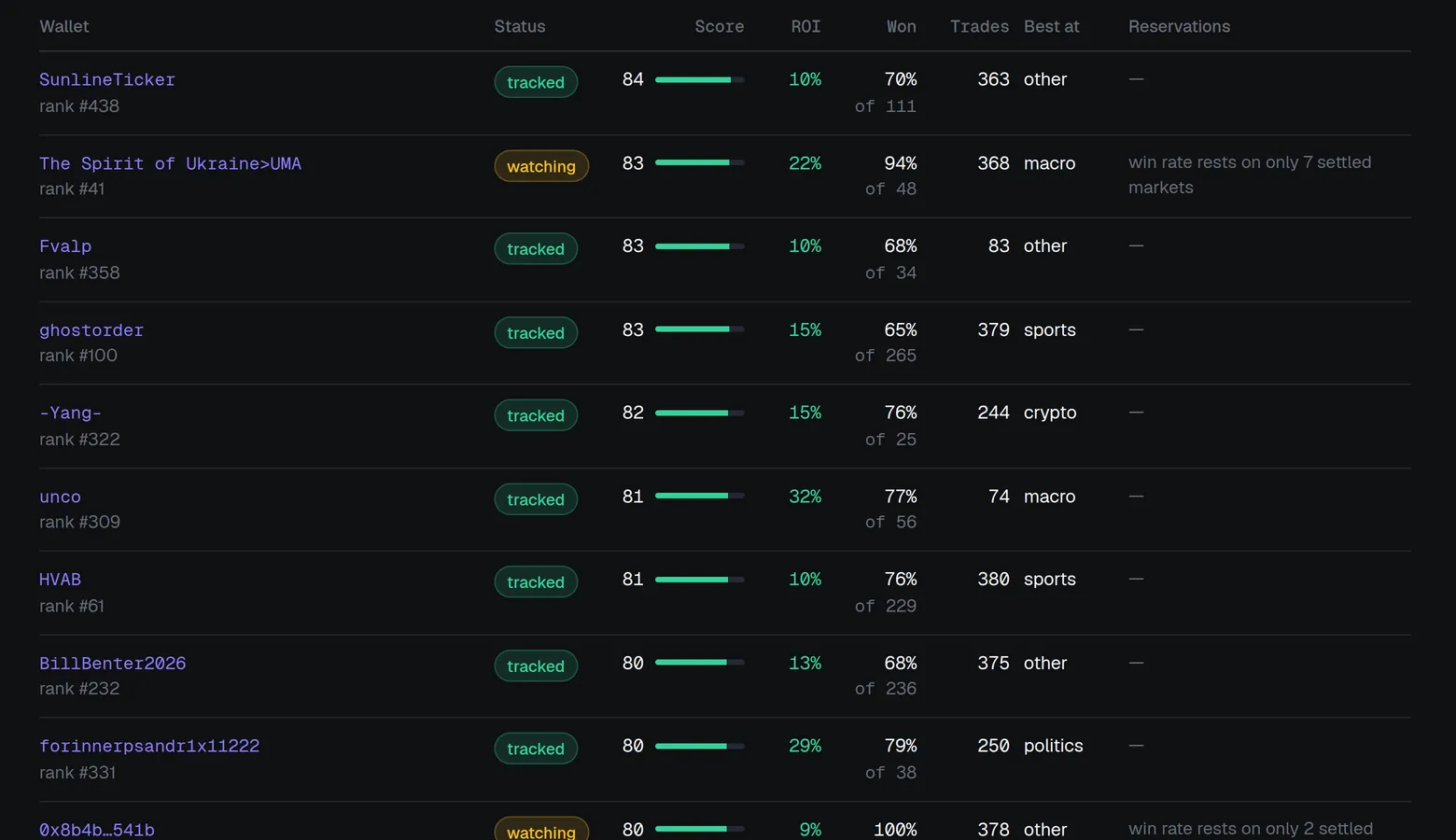
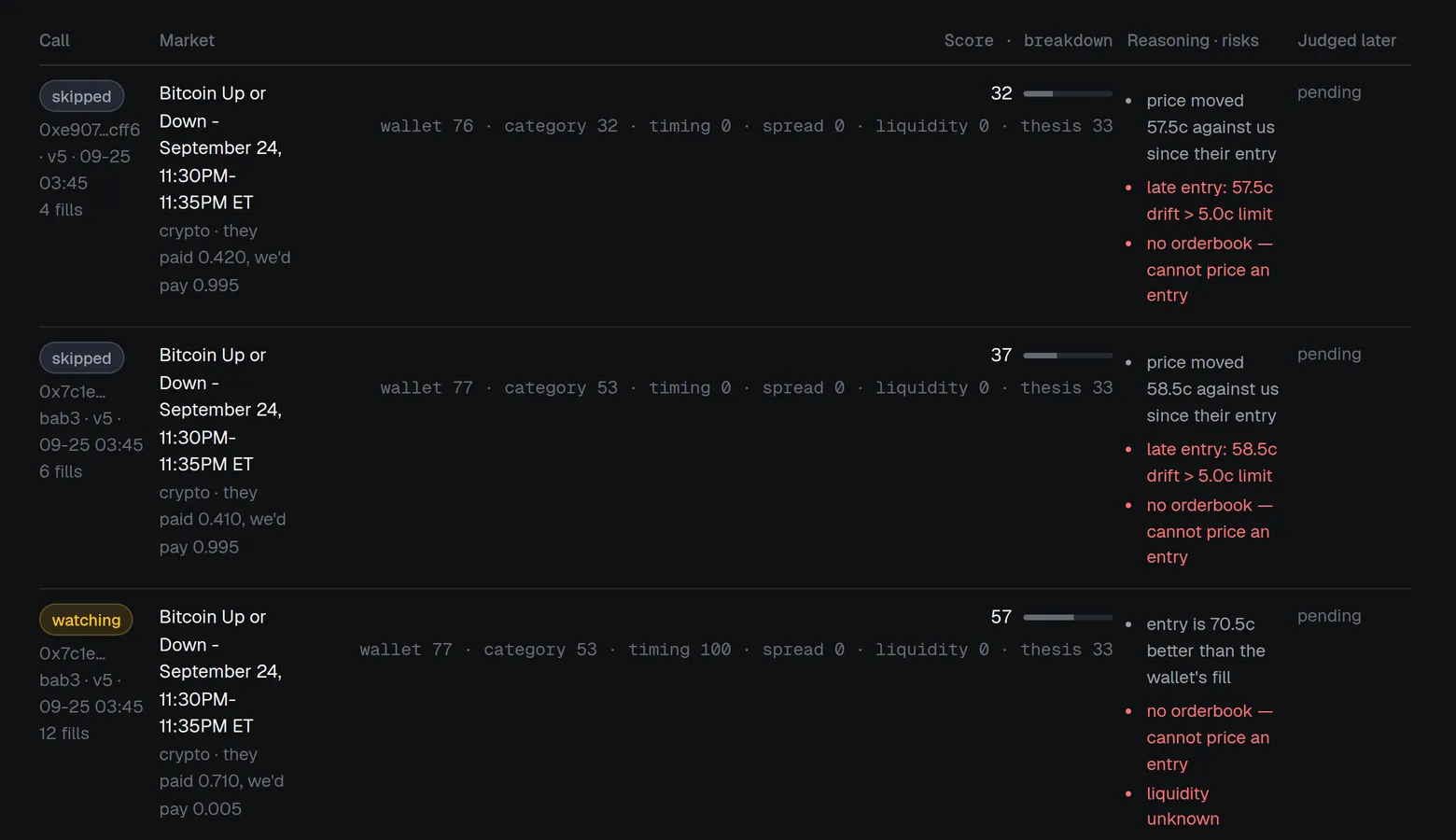
Copied, watched, or skipped — and the two or three facts that decided it. Nothing in the journal is edited after the fact.
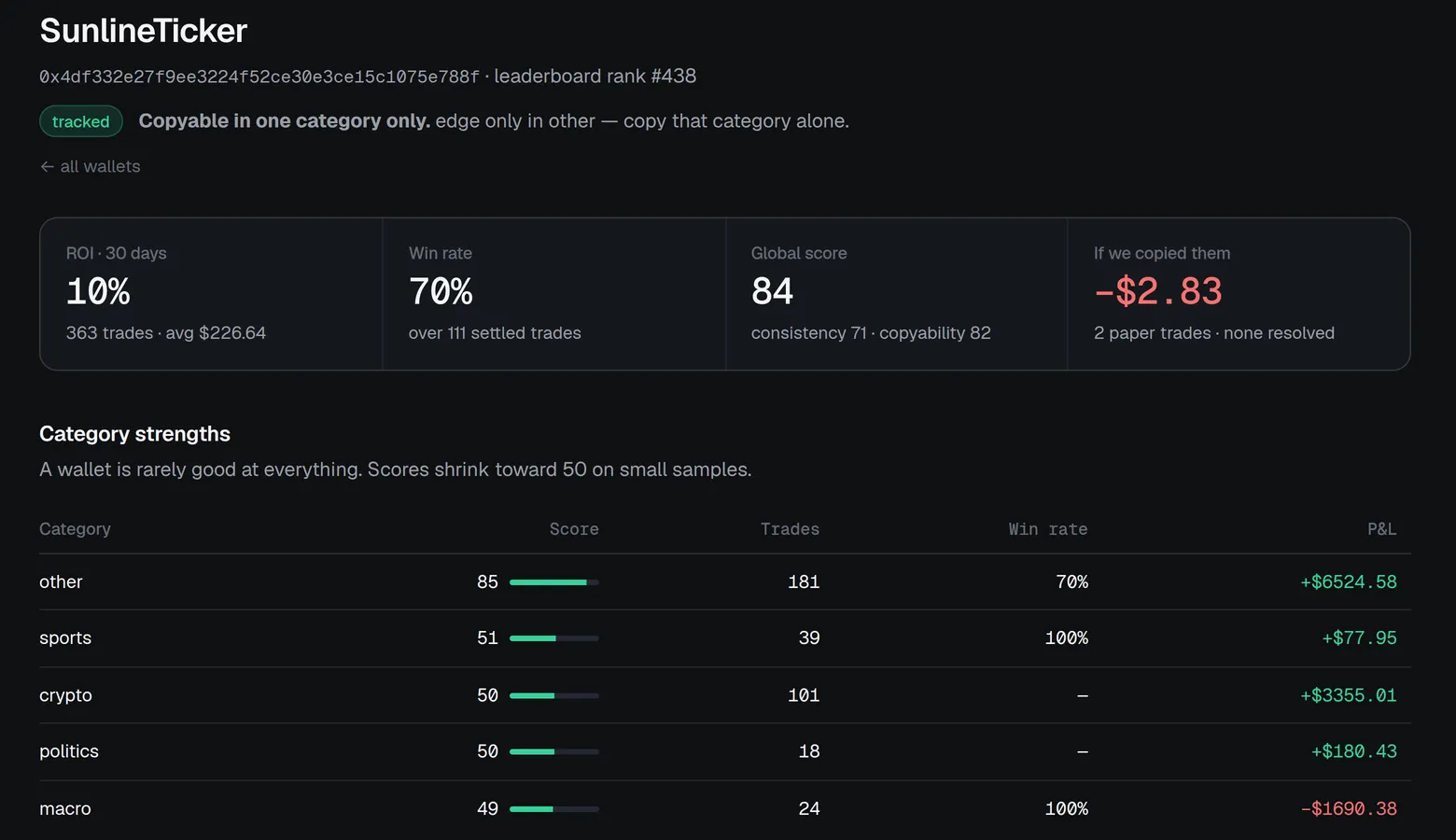
Category strengths, entry timing, liquidity, spread paid, and what happened when the desk copied them.
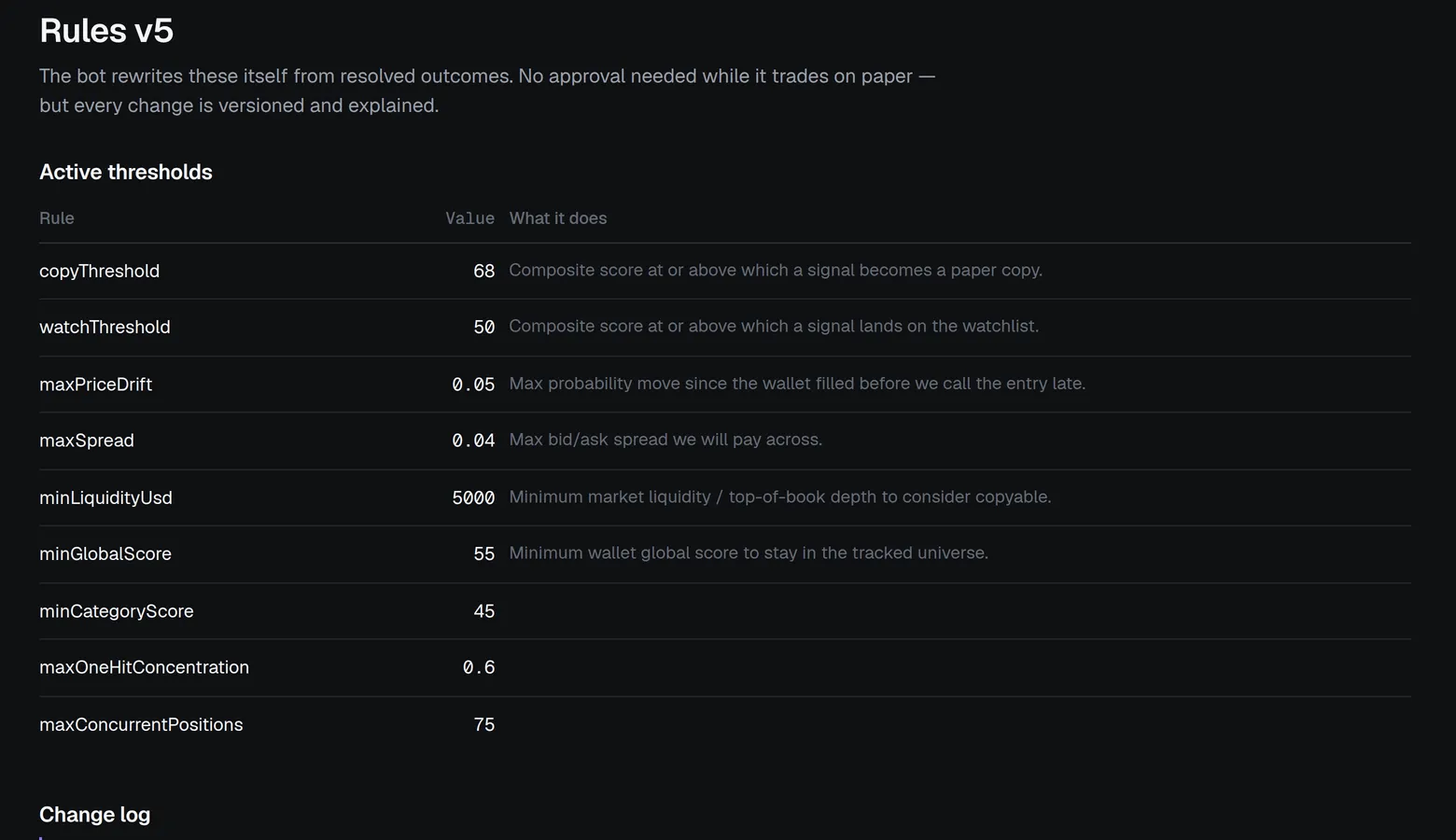
Version by version: what moved, from what to what, and the settled outcomes that caused it.
Free for 90 days with nothing held back and no card. After that, one payment covers a year, and nothing renews by itself.
Stratex Hub, yearly
$188
Starts free for 90 days. Pay once when you're sure. If you lapse, your account goes read-only and nothing is deleted.
Three things by design, and one test in the repository that fails if anyone tries to change them.
There is no order code in the system. Nothing here has ever placed a real order, and a test fails if signing or order libraries are added.
Signing in means signing a message that proves you own a wallet. That is not a transaction and cannot spend from it. Keys are never requested.
Paper results are not real ones. Fills slip, books thin out, and followed wallets change their minds. Prediction markets can lose you everything you put in. Nothing here is financial advice.
You can. The desk does — that is the blind control arm. Here is what it adds on top, and what that has cost so far.
1,566 settled · 43% won · $1.21 avg per position
13 settled · 46% won · $1.49 avg per position
No. Nothing here can place an order, and a test in the repository fails if anyone adds code that could. Stratex Hub is copy trading research: it tells you which Polymarket wallets are worth copying and shows you, on paper, what following them would have done. What you do with that is yours.
The desk reads the top 500 leaderboard wallets, studies each one’s last 30 days (profit spread across markets, one-market concentration, book depth at their fills, how early they enter), and rejects the majority. The rest are followed, and each new trade from them is scored again on its own merits before a paper copy opens.
Simulated positions filled against the real Polymarket order book at the moment the signal was seen, marked hourly at live prices, settled when Polymarket settles the market. Fees use Polymarket’s taker formula. A real fill a few seconds later may see less depth, and the site says so wherever a number appears.
Because the people using this already have one, and a signed message is a login that cannot be phished for a password. You sign a short text — the site name, your address, a one-time code. It is not a transaction, costs nothing, and cannot move funds. We never see a key.
Everything, for 90 days: the wallet rankings with reasons, the live signal feed, a paper account following published strategies at your bankroll, the filtered-versus-blind benchmark, the rule history, and a daily email. No card. After that, $188 for a year. If you don’t pay, your account goes read-only and nothing is deleted.
Because they are real. The desk runs a $1,500 paper bankroll with $5–$20 positions, and the track record started days ago, not years. A copy-trading site showing you a smooth five-figure curve on day one is showing you something other than results.
The leaderboard ranks by profit. One lucky market puts a wallet at the top. Stratex Hub ranks by copyability — could you have taken that fill at that price, at your size — and keeps a blind control arm that copies every signal with no judgement, so the filter has to beat it or admit it doesn’t.
Every figure on the site is explained on the methodology page: how fills are simulated from the order book, why the wallet figure is a margin on volume and not ROI, how the blind control works, and what the desk cannot see.
Sign in with a wallet, set a paper bankroll, and watch every desk signal open a position at your size. 90 days free.